![The Lives of Others [DVD] [2006]](https://m.media-amazon.com/images/I/91iMied2A5L._AC_SL3840_.jpg)
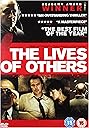

The Lives of Others [DVD] [2006]
Product ID: 48358437
Details
- FormatDigital Sound
- ContributorFlorian von
- LanguageGerman
- Runtime132 minutes
- ColourColour
Buy anything from 5,000+ international stores. One checkout price. No surprise fees. Join 2M+ shoppers on Desertcart.
Desertcart purchases this item on your behalf and handles shipping, customs, and support to Samoa.
In the former East Germany, no-one was above suspicion. Like George Orwell's vision of the future come to life, art and people and relationships were monitored obsessively; The Lives Of Others captures not only the paranoia and danger inherent in such a world, but also expresses hope that even in the most desperate situations, people can make a difference. The story of The Lives Of Others unfolds mostly through the eyes of a secret service agent who's been given the task of spying on an artistic couple who've attracted the attention of the Minister of Culture. Little by little, he's drawn into their lives even as we're drawn into his; and as he loses his faith in the government, he must decide whether or not to try to hide the transgressions of those he's watching. As the physical danger and emotional cost mounts, it's impossible not to become utterly engrossed; intelligent and well-written, The Lives Of Others is also deeply moving. It's rare to find a film that really deserves its rave reviews, and considering The Lives Of Others won a Best Foreign Language Film Oscar, it's got a lot to live up to. Happily, it's more than just up to scratch--it's absolutely brilliant. -- Sarah Dobbs Drama set in East Berlin prior to the fall of the communist government. Captain Gerd Weiser (Ulrich Muhe) is assigned to surveillance duties, specifically to collect information on popular dramatist Georg Dreyman (Sebastian Koch) and his actress partner Christa Maria Sieland (Martina Gedeck). As he becomes more and more submerged in their lives, Weiser's own attitudes to life, politics and the state begin to change, and it's not long before he finds himself in a dangerous situation. Review: One word - Perfection - Everything about this film achieves perfection. The oppressive political regime is cleverly portrayed through a combination of the lack of speed and lightness in the interactions, even the furniture and scenery feels heavy. The weight of this stillness is portrayed in the face and movement of characters, most notably the Stasi Officer who dominates this film. Not for a single moment do we forget that all of the characters fear that the state has complete control over all, that no one is safe, and scrutiny can and does fall upon anyone without any provocation. In the midst of this tension, artists struggle to achieve their potential and to maintain integrity. We quickly have the impression that it seems natural to maintain a certain level of distrust in intimate relationships, as the Stasi have ways of threatening what is held most dear to an individual if they want information to be given or kept from somebody. Watching this film feels experiential somehow. The multiple levels of the story transition seamlessly as we move between the mindset of those who seem to believe in and promote the regime, and those who are seeking to enjoy the relationships with those around them whilst protecting their rights to achieve and even to work. We understand more about how toxic and pervasive this is by the way the actress CM forces herself to comply with the vile actions of the official who pursues her. The understated script and direction of her character, as well as that of her playwright boyfriend when he learns of and addresses it tells us more powerfully of the complete control of the state than any loud and voluble outpouring of emotion could be. Both characters epitomise dignity within despair. I haven't said much about the Stasi officer. His storyline illustrates the power of art to transform belief. In a few simple shots of him eating alone and his bureaucratic diligence when seeking to observe others, we understand him to be a lonely character. We begin to appreciate his developing sense of connection to his subjects, and see that he seems to care. Music and literature have a role in his awakening humanity. It is the treatment of the actress by his senior which appears to shift the ground from under his feet. We see that his ethical core has awakened and shifted. I am not going to detail the closing half hour of the film so that others may enjoy the inevitability of events unfolding.....we begin to appreciate how his actions to protect begin to inadvertently cause harm...and we see that his transformation begins to threaten his position and status. This actor was perfectly case. His face is especially haunting in one particular shot. Very very powerful. I have to say, as it is so very rarely achieved, that this film has a truly perfect ending. Review: DVD - Good watch
| Contributor | Florian Henckel von Donnersmarck, Martina Gedeck, Sebastian Koch, Thomas Thieme, Ulrich Mühe, Ulrich Tukur Contributor Florian Henckel von Donnersmarck, Martina Gedeck, Sebastian Koch, Thomas Thieme, Ulrich Mühe, Ulrich Tukur See more |
| Customer Reviews | 4.5 out of 5 stars 2,539 Reviews |
| Format | Digital Sound, Dolby, PAL, Subtitled, Widescreen |
| Global Trade Identification Number | 05060052412270 |
| Language | German |
| Manufacturer | Lionsgate UK |
| Number of discs | 1 |
| Runtime | 132 minutes |
D**A
One word - Perfection
Everything about this film achieves perfection. The oppressive political regime is cleverly portrayed through a combination of the lack of speed and lightness in the interactions, even the furniture and scenery feels heavy. The weight of this stillness is portrayed in the face and movement of characters, most notably the Stasi Officer who dominates this film. Not for a single moment do we forget that all of the characters fear that the state has complete control over all, that no one is safe, and scrutiny can and does fall upon anyone without any provocation. In the midst of this tension, artists struggle to achieve their potential and to maintain integrity. We quickly have the impression that it seems natural to maintain a certain level of distrust in intimate relationships, as the Stasi have ways of threatening what is held most dear to an individual if they want information to be given or kept from somebody. Watching this film feels experiential somehow. The multiple levels of the story transition seamlessly as we move between the mindset of those who seem to believe in and promote the regime, and those who are seeking to enjoy the relationships with those around them whilst protecting their rights to achieve and even to work. We understand more about how toxic and pervasive this is by the way the actress CM forces herself to comply with the vile actions of the official who pursues her. The understated script and direction of her character, as well as that of her playwright boyfriend when he learns of and addresses it tells us more powerfully of the complete control of the state than any loud and voluble outpouring of emotion could be. Both characters epitomise dignity within despair. I haven't said much about the Stasi officer. His storyline illustrates the power of art to transform belief. In a few simple shots of him eating alone and his bureaucratic diligence when seeking to observe others, we understand him to be a lonely character. We begin to appreciate his developing sense of connection to his subjects, and see that he seems to care. Music and literature have a role in his awakening humanity. It is the treatment of the actress by his senior which appears to shift the ground from under his feet. We see that his ethical core has awakened and shifted. I am not going to detail the closing half hour of the film so that others may enjoy the inevitability of events unfolding.....we begin to appreciate how his actions to protect begin to inadvertently cause harm...and we see that his transformation begins to threaten his position and status. This actor was perfectly case. His face is especially haunting in one particular shot. Very very powerful. I have to say, as it is so very rarely achieved, that this film has a truly perfect ending.
P**N
DVD
Good watch
J**E
9/10. The Lives of Others
1984 is an inauspicious date for the setting of this fine movie about the East German autocracy. Whereas films like 'Goodbye Lenin' inspired a trend of nostalgia (coined as OSTalgia) for the GDR, 'The Life of Others' paints a more realistic picture. In a thoughtful, humane work, Stasi captain Gerd Wiesler is given a surveillance mission to spy on playwright Georg Dreyman and his actress girlfriend Christa-Maria Sieland. Weisler is an unquestioning party loyalist and cog in the Stasi machinery who takes pleasure in his thorough and exacting approach to such a mission. A dilligent professional, he is certainly not a sadist, but simply an automaton who divests emotional responsibility in the careful pursuit of his work. There is a brilliant early scene at the theatre where he is given his mission. Sitting in the Gods you are made privvy to the global perspective of a surveillance expert, the professional pleasure in his cold assessment of the situation. However, in a plot with shades of Francis Ford Copolla's masterpiece The Conversation, he find himself slowly drawn to the couple and ultimately implicated in their fate. Although it could also be suggested that there is a hint of 'Rear Window' about the story, Weisler's gradual softening of perspective is less Hitchcock-style obsession or voyeurism but rather about a lonely man warmed vicariously by the live and loves of others (hence the title). Georg and Christa-Maria's existence is one (un)governed by the senses, by friendship and romance. Their flat is warmly photographed as a haven of free expression, of literature, music and art. By contrast Weisler returns to his spartan appartment with only state propagandist television for company or entertainment. Furthermore, the soft warm tones of the couple's home is shown in stark opposition to Weisler's austere attic surveillance center, itself drained of almost all colour. Weisler chalks a map of the couples' flat on the bare floorboards of the gloomy attic, further illustrating his immersion in their lives but also his isolation from it. Brilliantly cast, Ulrich Mühe's Weisler has the emotionally fridgid and dispassionate features of a lobotomised Kevin Spacey. As his heart thaws, his expression softens in the subtlest of degrees, his marble eyes acquiring a human liquidity. In one scene, when Weisler weeps to the sound of Georg playing the piano, a tear erupts from his unchanged face as if the ice within him has melted. His emotional distance is also emphasised in another starkly lit scene in which Weisler has a brutally perfuntary encounter with a prostitute who makes it clear his time is on the meter. It's a understated masterpiece that - despite its sinister and ultimately tragic themes - doesn't resort to explicit violence or melodrama. It is also given levity by the subtlety of Ulrich Mühe's performance, and the humanity of the ending, which I won't spoil by divulging here.
E**S
revealing film of the closed world of spying
A very good film that recreates the secret and closed world of spying in a communist country.
C**N
Very historical
Sad but excellent & Stasi despicable facists
F**N
Ordinary techniques of control
The film treats professional techniques of monitoring and controlling the behaviour of the citizens of a police state, East Germany, the German Democratic Republic. At the beginning we listen to a lecture on the interrogation of those suspected of deviation. The lecture is given in a large clean and attractive lecture room by a man, the anti-hero of the film, who speaks with the assured modesty of an expert. Around him young students take notes. In the film all the technicians are excellent at thier jobs; the recording engineers, those who hide wires in walls, those who tap into private telephone conversations are quick and efficient. The anti-hero is a niceish and very lonely man; his boss is nastier and more ambitious and the minister for whom they both work is very unatractive. The film is really about them. On the other side, as it were, are a writer of plays and his leading lady and thier talented friends. They are doing quite well in a system where deviation by an 'intellectual' is punished by professional death. One of the friends has just had his career cancelled and commits suicide. This, coupled with the minister's effective rape of the actress, leads the playright to engage in a deliberate act of treachery, by publishing anonymously in the West the statistics of suicide in the German Democratic Republic. He gets away with it because the anti-hero lets him. The film stresses in a quiet tone the everyday expectedness from an individual's viewpoint of the exercise of total political control down to the most private level by a one-party one-hierarchy system. The ordinariness of a complete lack of freedom is the context of the film in which both the hero and the anti-hero behave with great courage. It is a compelling account. The acting, expecially of the anti-hero is splendid.
P**N
A Film that Grips from First to Last - Totally Compelling
This is a tremendously powerful film, & is now high on my list of favourites. I watched it twice in 48 hrs, & although I was profoundly moved by the first viewing, the second made even more of an impact, revealing nuances I hadnot fully appreciated originally. Earlier reviewers have praised the film eloquently, noting the superbly taut production values & mesmerising acting of the protagonists, as well as the pernicious logic & attention to detail of the GDR & not least, the small, redeeming moments of human goodness which make it so powerfully moving, so I will not further elaborate on these things. One thing that struck me: Weisler, the GDR officer at the core of the film, gradually finds his sympathies drawn towards the people he is spying on. But on my second viewing I saw it slightly differently. I believe his reason for suggesting surveillance was not unambivalently that he was suspicious, as he told his superior, but that from the moment he saw them in the theatre he was drawn to them. He has lead a lonely, narrow life, & it seems feasible to me that he experienced the first stirrings of a suppressed recognition or yearning as he gazed at the writer & actor at the end of the play, as they took their encores. He wanted to be them, or be like them. In effect & to use modern parlance, he began stalking them under the guise of surveillance, & unwittingly found himself more & more involved with them as a consequence. If you have not yet seen this film I urge you to do so. This is superlative cinema that you won't forget in a hurry.
A**A
No subtitles or other language
Good film but only get the dvd if you don’t need subtitles- there is no option for subtitles or any language other than German. Instead get the Amazon prime one to have subtitles otherwise the film came in perfect condition and had no issues
J**.
Ein einzigartiges Drama über den Apparat der Staatssicherheit in der DDR!
Mit einem Spitzen Ensemble, einem ausgereiften Drehbuch, sowie wirklich perfiden Spannungsmomenten und einer glaubwürdigen Umsetzung ist Regisseur Florian von Donnersmark wirklich ein Meisterstück gelungen. Wie immer (Ladies and Gentlemen) es können SPOILER vorkommen: Der leider schon verstorbene Ulrich Mühe zeigt die ganze Bandbreite seines Könnens als Hauptmann Gerhard Wiesler oder auch HGW/XX7 der im Theaterregisseur Georg Dreymann einen Staatsfeind sieht. Sein Vorgesetzter glaubt nicht recht daran, schmückt sich aber während der Pause einer Vorführung mit "fremden Federn" und deutet bei einer Unterredung mit dem Kulturminister Bruno Hempf an, dass der Saubermann Dreymann vielleicht doch nicht so sauber ist, wie er scheint. Die Verwanzung der Wohnung findet dann recht zügig statt und ab diesem Tag überwacht Wiesler (im 12 Stunden Schichtwechsel) alles was sich in der Wohnung von Georg Dreyman abspielt (auch die intimen Vorkommnisse). Wiesler's Engagement und vorallem Instinkt täuscht sich nicht, denn Dreymann hat wirklich vor etwas gegen den Unrechtsstaat DDR zu unternehmen. Nachdem sein Kollege und Mentor Albert Jaska durch ein Berufsverbot der Stasi den Freitod wählte, will Dreymann unbedingt durch einen Artikel (der im Spiegel in der BRD erscheinen soll) aufmerksam machen, dass die DDR seit 1977 aufgehört hat, die Selbstmordstatistik zu führen. Doch nach und nach kommen dem sonst so linientreuen und akkuraten Hauptmann Wiesler Selbstzweifel. Ist es denn legitim, sich so sehr in das Leben anderer Menschen einzumischen? Ist ein Staat der seine Mitmenschen Tag und Nacht überwachen lässt, der nichts von Privatsphäre oder Datenschutz wissen will, wirklich so demokratisch, wie sich die DDR damals ja selbst genannt hat? Florian Henkel von Donnersmark war gerade mal 33 Jahre alt, als er seinen Film inszenierte und es ist eigentlich sehr schade, dass man danach nicht mehr so viel von ihm gehört hat, denn dieser Film ist ein glatter 10 Sterne Film. Ich bewerte in meiner eigenen Skala etwas anders als hier bei amazon.de, da ich fünf Sterne für etwas wenig halte, um einen Film als erstklassig darzustellen. Deshalb zehn glatte Sterne von zehn möglichen, da es wirklich kaum an dem Film zu mäkeln gibt. Wie schon oben erwähnt ist die Darstellerregie wirklich einmalig. Ulrich Mühe als Stasi-Mann Wiesler, Ulrich Tukur (nicht Ost-Schauspieler wohlbemerkt!) als sein direkter Vorgesetzter Anton Grubitz (ein verbohrter und absoluter überzeugter Befehlsempfänger der nicht merkt was vor sich geht), Martina Gedeck als sehr attraktive Christa Maria Sieland die sich extrem in einem Gewissenskonflikt zwischen ihrem Freund Georg Dreymann und dem Kultusminister Hempf (großartig: Thomas Thieme) befindet. Um sich ihre illegalen Tabletten zu besorgen, gibt sie sich Hempf hin und hat somit seine Gunst, solange sie dass tut was er will. Von Donnersmark zeichnet seine Figuren sorgfältig und akribisch, macht wirklich nur leichte Flüchtigkeitsfehler bei der Umsetzung des Stoffes, z.B. bei der Szene zwischen Wiesler und einem kleinen Jungen mit einem Ball in einem Aufzug. Der Junge fragt ihn direkt während der Fahrt, ob er denn wirklich bei der Stasi wäre, da sein Papi gesagt hätte, Leute bei der Stasi wären böse und verraten andere. Obwohl Wiesler sofort den Namen des Vater wissen möchte, entscheided er sich plötzlich anders und fragt nur wie denn sein Ball heissen würde. Das wirkt doch leicht unglaubwürdig. Weiter, obwohl die Garderobe von wirklich fast allen Darsteller durchaus authentisch und für damalige DDR Zeit (1984) sehr sorgfältig ausgesucht wurde, sind die Kleider von Martina Gedeck einfach nicht zeitgemäss, so etwas hat es in der DDR nicht gegeben, vielleicht nur, wenn sie wirklich gute Beziehungen zur BRD gehabt hätte und dann hätte auch sie sofort auf der schwarzen Liste der Staatssicherheit gestanden. Aber bitte nicht falsch verstehen, ihr wisst er sucht und er findet etwas; aber hier gebe ich wie gesagt die volle Punktzahl und es geht noch weiter... Die Musik ist wie bei 10 Sterne Filmen (2001, Schindler's Liste, Ghandi etc.) einfach nur passend, einfühlsam und sehr innovativ komponiert von dem libanesischem Musiker Gabriel Yared, der sich erst nach einer Weile dem Stoff annahm. Ebenfalls ist zu bemerken, dass alle Darsteller für weniger als die Hälfte ihrer Gagen sich bereit erklärten, im Film mitzuspielen, dass sie das Drehbuch einfach grossartig fanden und das Leben der Anderen für einen sehr wichtigen Film hielten, was sich ja im Nachhinein als richtig herausgestellt hatte. Sebastian Koch selbst konnte vor den Dreharbeiten kein (oder kaum) Klavier spielen und musste fleissig üben, damit er die Szenen in denen er "die Sonate vom guten Menschen" spielte, glaubwürdig darstellte. Die Noten dieses Stückes waren ein letztes (vielleicht Abschiedsgeschenk) Geschenk seines Kollegen und Freundes Albert Jaska, der durch sein Berufsverbot Selbstmord beging. Mit Stück wie z.B. "Die unsichtbare Front" oder generell dem Soundtrack-Stück "Das Leben der Anderen" fängt Yared die unglaubliche Verzweiflung der Personen im Film ein, wie wenn jemandem mitgeteilt wurde, dass etwas schlimmes passiert sei, er es aber noch nicht weiss. Und obwohl der düstere, pessemistische Grundtenor (im Bezug die Story und ihren Hintergrund) ständig über dem Film hängt, gibt es hier und da sogar einige humorvolle Szenen (ich sag nur: ach, leck mich am A.... ich bin jetzt im Westen). Besondere Szenen sind natürlich, als Grubitz durch seinen Vorgesetzten mit dem Spiegel-Artikel zur Schnecke gemacht wird und er darauf Wiesler anspricht, der sich fast verplappert, das Ruder gerade noch so herumreissen kann und ab diesem Moment voll nicht mehr überzeugt für die Stasi tätig ist. Weiter, natürlich die Szene in der die Mauer geöffnet wird und vorher Grubitz Wiesler als Verräter entlarvt ihm offeriert, dass er nur noch 20 Jahre Jahre in irgendeinem Kellerloch sitzen wird um Briefe aufzudampfen. Ja, das war die Stasi, live. Beste Szene: der Schluss, Dreymann baut sich in Westberlin eine neue Existenz auf, trifft während einer Aufführung den damaligen Kulturminister wieder und erfährt, dass er komplett von der Stasi überwacht wurde, das volle Programm. Durch dieses Wissen macht er sich auf in die Stasi-Behörde, um seine Akte einzusehen. Unter dem Deckname Laszlo bekommt Dreymann Gewissheit und die Tatsache der Offenbarungen über ihn, seine Vorhaben, seine Freundin Christa Maria, seine Freunde, sein intimes Privatleben, das alles war nicht mehr geheim. Obwohl schockiert, liest er auch über die Nichtenthüllungen des Stasi-Hauptüberwachers HGW XX/7, dessen richtiger Name ihm zunächst vorenthalten wird. Auf Verlangen wird ihm dann gesagt, wer sich dahinter verbirgt. Zunächst möchte Dreymann ihm direkt gegenüber treten, sich bedanken für seine guten Taten ihn nicht zu verraten, ihm viel Ärger, Trauer, Angst, vielleicht sogar Tod von ihm abgewendet zu haben. Doch er entscheid sich anders. Er schreibt ein Buch: Die Sonate vom Guten Menschen und veröffentlicht es. Wiesler mittlerweile (als Verlierer der Einheit) beruflich nur noch als Werbemittelausträger tätig, sieht in Schaufenster eines Berliner Buchladens die Ausgabe: Georg Dreyman, die Sonate vom Guten Menschen. Er geht in den Laden und schlägt die ersten Seiten auf: Gewidmet HGWXX/7, in Dankbarkeit. Ein absolut einzigartiger, grossartiger und toller Film. Ein Muss!!! Absolut sehenswert. Anmerkung: Diese DVD enthält auch eine Hörfilmfassung für Blinde die ebenfalls sehr plastisch und deutlich den Film für Sehbehinderte schildert. Auch noch ein Plus sind zwei sehr gute Audiokommentare einmal von Ulrich Mühe (der manchmal so gefesselt ist, dass er gar nichts mehr spricht :-) und einmal von Florian Henkel von Donnersmark höchstpersönlich. jw
I**P
The Man In the Grey Flannel Life
Made on a shoestring budget of $2 million, The Lives of Others is the most suspenseful psychological thriller I've seen in a long time, ranking with Francis Ford Coppola's The Conversation and John Frankenheimer's The Manchurian Candidate. What's more, it presents one of the strongest pro-individual, anti-collectivist themes of any movie I've ever seen--all the more surprising because it hails from, of all places, Germany. Its key lies in its title, which seems at first glance drippingly altruistic. The year, appropriately, is 1984, and Captain Gerd Wiesler (Ulrich Mühe) is in his twentieth year as an agent of East Germany's dreaded Ministry for State Security, commonly known as "Stasi." The "shield and sword" of the Socialist Unity Party, 100,000 Stasi agents and 200,000 paid informers hold the small Soviet satellite nation in a death grip, monitoring and controlling the lives of its 17 million citizens. Captain Wiesler is a meticulous interrogator, ruthlessly wearing down suspects until they confess. An instructor at the Stasi academy, he trains future agents always to be on guard. "The best way to establish guilt or innocence is non-stop interrogation," he instructs his students. "The enemies of the state are arrogant. Remember that. " A humorlessly menacing man, Wiesler leads a lonely, Spartan existence in an antiseptic, sparsely furnished apartment in a concrete high-rise that houses many fellow agents. One day at the academy, his former classmate and current boss, gregarious Lieutenant Colonel Grubitz (Ulrich Tukur), drops in with an assignment right up Wiesler's alley. One of their artists appears to be straying from the flock, and Wiesler has been assigned to watch him. However, the subject in question is no dissident, but the most celebrated playwright in East Germany, Georg Dreymann (Sebastian Koch)--a citizen so loyal to the Party that he believes his is "the greatest country on earth." Later that evening, spying from a balcony seat with opera glasses, Wiesler detects the mark of subversiveness on Dreymann's face as he watches the actors onstage performing his play. As Georg beams with proprietary approval, rising to applaud, Wiesler quietly utters to himself a one-word indictment that seals the dramatist's fate: "Arrogant." Georg lives with longtime companion Christa-Maria Sieland (Martina Gedeck)--a radiant brunette who is as celebrated an actress as Georg is a writer (and to whom Wiesler clearly takes a fancy). While they are out of their flat, Wiesler's technical team descends upon their home, bugging the place. "Operation Lazlo" is now in full swing, and Wiesler and his partner monitor their subjects around the clock from the apartment building's empty attic. At first, the surveillance of Georg and Christa appears fruitless. At a dinner party they host, a hysterical theatrical colleague (Hans-Uwe Bauer), who's suffered detention and psychological torture at Berlin's infamous Hohenschönhausen prison, accuses another director of being a Stasi informer. Georg is quick to defend the man against the accusation. Yet, through the course of his work, Wiesler makes some rather ugly discoveries about the investigation. He learns that it was ordered at the behest of national Culture Minister Bruno Hempf (Thomas Thieme), a porcine bureaucrat who's extorted sexual favors from Christa under the threat of blacklisting her. Wiesler also eventually finds his friend Grubitz's schmoozing to be a cover for vicious social climbing and discovers that Grubitz is complicit with Hempf's scheme to use Stasi as a cat's paw to eliminate Georg, his romantic rival. Within Wiesler stirs a realization previously kept repressed: that his unquestioning faith in his country has enabled not his ideal of the perfect socialist state, but the hideous arrogance of avaricious thugs who run everything in the "workers' utopia." Where once was the heel-clicking impersonality of a robot, a conscience begins to grow. Wiesler comes to view Georg and Christa and their circle of bohemian friends not as specimens under a microscope, but as real individuals, with hopes and dreams, loves and heartbreaks. Having grown a conscience, he soon also yearns for a heart, as he silently assesses the utter emptiness of his own life. Swept up in his subjects' personal lives, Wiesler's detached spying turns into voyeurism. But it isn't a perverted voyeurism, because, for the first time, the lonely captain catches a glimpse into a world of beauty, poetry, and music that is alien to his two-dimensional existence. Sympathetic to the predicament of these enemies of the state, Wiesler begins covering for them, faking his reports, and remaining silent about Georg's gradual disillusionment with the DDR after an old director friend (Volkmar Kleinert) commits suicide. He overhears an argument in which Georg confronts Christa with knowledge of her affair with Hempf. Christa--already insecure about her talent--explains that she fears being blacklisted if she breaks it off. Wiesler feels compelled to protect her: He accidentally-on-purpose runs into her in a bar, pretending to be a fan, and tells her that her performances have inspired him. "Many people love you for who you are," he says, sincerely. "You are even more yourself onstage than you are in real life." Christa dismisses his compliment, telling Wiesler he can't really know her. "Did you know that I would sell myself for art?" she asks. "But you already have art," he counters. "That would be a bad deal; you're a great artist." Though his simple compassion, he gives Christa the strength to believe in herself and renounce her extorted affair with Hempf. But in doing so, Wiesler unintentionally sets into motion a nail-biting series of events that leads inexorably both to tragedy and redemption. The Lives of Others is a superb film, top-drawer in every regard. Cathartic and ennobling, it recalls Fahrenheit 451 and We the Living in its presentation of tragic heroes forced to examine their deepest-held yet deeply mistaken principles. Hagen Bogdanski's cinematography is compelling; through subtle differences in lighting he gives Silke Buhr's sets an additional dimension that places the characters in emotional context. Shot with tungsten-balanced film, Georg and Christa's incandescently-lit apartment radiates warmth; yet by capturing with daylight film the omnipresent, fluorescent-lit settings of the Stasi world, Bogdanski renders it cold and bloodless. Gabriel Yared's simple, haunting soundtrack is the perfect evocative counterpart for the action onscreen. The acting is realistic, but never naturalistic. Martina Gedeck is a pleasure to watch, not merely because of her physical beauty, but for her impressive emotional range. Ulrich Tukur's capacity to turn on a dime from regular guy to cold-blooded manipulator is simply scary. And Sebastian Koch combines a physically imposing presence with a gentle, almost fatherly manner, reminding me of a younger Rutger Hauer. But Ulrich Mühe steals the show as Wiesler. I have never seen an actor convey such a broad range of feelings within such narrow parameters. Where a Pacino or a Steiger would explode with ferocity, Mühe underplays, moving the audience with the sudden shift of an eyebrow, the drawing-in of a cheek muscle, or the quiet fall of a teardrop that betrays his sphinx-like façade. Mühe began his acting career in communist East Germany. When government records were opened to the public after German reunification, he learned that his actress wife had been informing on him to the Stasi during the entire six years of their marriage. Clearly, he drew upon this reservoir of traumatic betrayal for this role. The Lives of Others is flawlessly crafted, completely engaging the heart and mind. Most impressive is the fact that it's Henckel von Donnersmarck's feature film debut, released while he was still at the relatively young age of 32. In a recent interview, von Donnersmarck--who saw life behind the Iron Curtain first-hand when he visited family in East Germany as a child--spelled out his thoughts on communist repression as well as independent filmmaking: "The [phrase] 'Independent film' makes sense to me only if it means that the director has full artistic control. How could a film be independent otherwise? ... I know that very well from East Germany: Until the Wall came down, the Dictatorship of the Proletariat had Final Cut on everything: novels, plays, films, even paintings. Make no mistake: hardly ever did they actually censor anything. But looking back at the art of those four decades, you can still feel the state in everything, and most of the art of that era is very impersonal and boring. Because the artists censored themselves, often without knowing it." Imagine my surprise, then, when the PC crowd at the recent Academy Awards ceremony--who feted environmental scam-artist Al Gore for his global warming crock-umentary--also bestowed the Best Foreign Language Film award upon The Lives of Others, rather than upon heavily favored Pan's Labyrinth. (I think Lives deserved the nod for Best Motion Picture overall, but I'm not unhappy that the Academy gave that award to director Martin Scorsese's The Departed, a consolation prize for snubbing him so many years.) This cinematic masterpiece is a cause for celebration. Rarely has a filmmaker burst on the scene in such total command of his material. As a directorial debut, The Lives of Others belongs in the same company as Orson Welles's Citizen Kane. I can only hope that Florian Henckel von Donnersmarck has a Touch of Evil yet to come.
C**N
Le Vite degli Altri
Titolo Originale: The Lives Of Others Regia DI/Diretto DA: Florian Henckel Von Donnersmarck Cast: Martina Gedeck, Ulrich Muhe, Sebastian Koch, Ulrich Tukur Paese-Anno/Nazionalità: Germania, 2006 Audio: DTS Genere: Storico (Thriller, Spionaggio) Durata: 138 Minuti Circa Distribuzione Italiana: Rai Cinema (01 Distribution) Visto Censura: Film per tutti Voto Complessivo/Giudizio Finale: 5/5 Vincitore del Premio Oscar (Miglior Film In Lingua Straniera) Vincitore del David di Donatello 2007 (Miglior Film Dell'Unione Europea) Nomination Al Golden Globe 2007 (Miglior Film In Lingua Straniera) Opera prima di Florian Henckel Von Donnersmarck, Nonchè Capostipite unico nel suo genere. Uno dei Miglior Thriller degli Anni 2000, Composto da una Sceneggiatura di ferro e da una Regia sensazionale. Percezione di Ansia e Tensione dal primo All'Ultimo fotogramma. Fantastico, A dir poco meraviglioso: Unico nel suo genere: Recuperatelo assolutamente. Formato Video/BD (Blu-Ray Disc): Rai Cinema (01 Distribution) Propongono L'Edizione L'Edizione 1 Singolo BD di Le Vite degli Altri In Formato Video: Anamorphic Widescreen - PAL 16/9 - 2,40:1@ - HD 1080 24p (VC-1) Trasferimento video a dir poco Impeccabile, Resa video Ineccepibile. Realizzare un Blu-Ray migliore di questo sembra veramente Impossibile: Lo scudo di battaglia di 01 Distribution. Veramente non è possibile, fare di meglio. Promosso a pieni voti. Lingue-Audio/Sottotitoli: Italiano DTS-HD Master Audio 5.1 / Tedesco DTS-HD Master Audio 5.1 (Sottotitolato) Audio perfetto, eccezionale, calibratissimo. Sincronizzazione eccellente, Doppiaggio fenomenale. Contenuti Extra: 4/5 Commento di Florian Henckel Von Donnersmarck Trailer Italiano Ufficiale della 01 Distribution Making Of, Dietro Le Quinte Scene Tagliate Non molti, Ma essenziali. Voto Complessivo All'Edizione BD/Blu-Ray Disc: 5/5 Eccellente edizione Italiana Blu-Ray per questo meraviglioso Thriller. Stupendo e Grandioso. Non ve lo perdete, Non perdete per strada questa straordinaria edizione BD.
O**R
A VOIR ABSOLUMENT
A VOIR Excellent film. - Malheureusement méconnu !
K**Z
Delivered very fast, good film
This film is a classic already. Glad to find it on Amazon. Delivery was very fast, no problems. Very happy with this purchase.
Trustpilot
2 days ago
3 weeks ago