
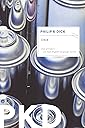
Ubik
Product ID: 4022239
Buy anything from 5,000+ international stores. One checkout price. No surprise fees. Join 2M+ shoppers on Desertcart.
Desertcart purchases this item on your behalf and handles shipping, customs, and support to Samoa.
Named one of Time's 100 Best Books, Ubik is a mind-bending psychological thriller about the perception of reality from Philip K. Dick, the Hugo Award-winning author of The Man in the High Castle . “From the stuff of space opera, Dick spins a deeply unsettling existential horror story, a nightmare you’ll never be sure you’ve woken up from.”—Lev Grossman, Time In a dystopian future of psychic powers, Glen Runciter runs a lucrative business — deploying his teams of anti-psychics to corporate clients who want privacy and security from psychic spies. But when he and his top team are ambushed by a rival, he is gravely injured and placed in “half-life,” a dreamlike state of suspended animation. Soon, though, the surviving members of the team begin experiencing some strange, reality-bending phenomena, such as Runciter’s face appearing on coins and the world seeming to move backward in time. As their world deteriorates and technology gets ever more primitive, the group needs to find out what is causing the shifts and what a mysterious product called Ubik has to do with it all. “More brilliant than similar experiments conducted by Pynchon or DeLillo.”—Roberto Bolaño Review: Great PKD Book! - Wow! Ubik was a wild ride, even by Philip K. Dick's standards. Or perhaps a better way of putting it is the book meets the high standards he creates for his works, and then some! As the book begins, we meet Glen Runciter, head of the world's top anti-psi agency (to combat all of the psi organizations that have arisen now that it is 1992 -- heh!), located in New York City. He confers with his late wife, Ella, who is dead and buried in a Swiss moratorium, where she is in a suspended state of "half life," through "cold-pac" --- something like our cryogenics. The world's top psi's are disappearing, and Runciter wants his wife's opinion on what to do. She thinks they should advertise more. We then go off to met Joe Chip, Runciter's top man, who is dirt poor and in debt. A Runciter scout has brought a young woman named Pat by to meet Joe. Pat has an unusual ability to nullify events before they even happen. Her psi tests are off the charts, and Joe marks on her report that she should be watched, that she could be dangerous. Runciter has a visitor from a businessman with a business on Luna (the moon?), in need of immediate anti-psi help. Runciter agrees to overlook some typical preliminaries, since it's an emergency, and soon he's leading Joe, Pat, and nine others to Luna to save this company. Where they're sabotaged. A bomb goes off in the room in which they're gathered and Runciter takes it the worst. He's pretty much dead, and the team rushes to get him into cold-pac in the spaceship so he can be saved and consulted with his wife. Joe starts planning on how to get back at their enemies from that moment forward. And from that moment forward, things start unraveling. It gets really PKD-like as alternate realities are discovered and time moves backward. Joe starts receiving odd messages from Runciter while members of the team start dying off, decomposing quickly. Soon the surviving members find themselves back in 1939 in Des Moines IA -- Joe has to get there by bi-plane. They're there for Runciter's funeral, but by now, Pat is under deep suspicion for being behind this, plotting with their enemies, and Joe's really ticked. Soon the reader doesn't know who is dead and who is alive! I won't give away the ending, but I'll just let you know that it's a typical PKD mind-f*** which is immensely satisfying while still being a bit confusing. It's a lot to swallow at once. Ubik rears its head at the beginning of each chapter in the form of an unusual ad for an unusual product, and Ubik plays a real role at the end of the book, but it's a bit mysterious at that. Suffice it to say that it's a miraculous spray can that is Joe's only way to stay alive. Philip K. Dick's eye for minutia is especially good in this novel as he highlights magazines from 1939 (real ones), early cars, etc. And this book is a fast paced thriller too. I read it in less than a day. I couldn't put it down. No wonder Time magazine chose it for inclusion as one of their "100 best English-language novels!" No argument there. I don't know if this is my favorite Philip K. Dick book, but if not, it's close. It's got the usual PKD themes like unreliable and alternate reality, time running backward, precognition (Minority Report, anyone?), telepathy, paranoia, hallucinations, and even spirituality. It's got a fantastic ending. It's a great introduction to Dick, if you're unfamiliar with him, and if you're a fan, it's a must read. You won't be able to put it down. Highly recommended. Review: Who Is Alive? Who Is Dead? - I love science fiction—today perhaps not in the way I loved it back in the 1980’s and early 90’s, when I devoured so much of it—but those authors—Heinlein, Bradbury, Clarke, and, especially, Asimov—were the core of my reading until my tastes expanded as I got older. Dick was not one of my favorites; still, I had read and enjoyed The Man in the High Castle and a few others, and I knew he was the mind behind some of my favorite movies: Total Recall, Minority Report, and, especially, Blade Runner. Ubik was a story with which I was not familiar; however, I decided to give it a read and it took me back to a younger self. This novel is a mishmash of ideas, which is why I like it. In this world there are people with mental powers like mind-reading, telepathy, and precognition, as well as people who have the ability to counter these powers. Also, people have the ability to communicate with the recently dead, whose personalities live on in an accessible “half-life” for a certain period. Even better is the setting, which shows a world where everything costs, from paying your stove to cook and your front door to open. The story takes place among a group of people who work for a company that hires people with the counter-powers to deflect the advantages of people who have the powers. After an attack on the company, the world seems to regress back in time for the people in the accident—rockets become jets become bi-planes, etc. The questions the novel explores are things like, is the regression in time truly happening or an illusion? has everyone been killed and is this an experience of half-life? are some dead and some alive? is it ultimately possible to use our experiences to tell who is dead and who is alive? Heady stuff. Great stuff. Of course, reading it now reminds me also of the weaknesses of some of the science fiction I love. The characters are not drawn particularly strongly. And even the best science fiction cannot help but be a reflection of the time in which it was written. The pay-as-you-go appliances seem surprisingly old-fashioned, and the preponderance of cigarette smoking seems to be something that writers of the 60’s and 70’s couldn’t imagine a world without. And yet, it is easy to immerse yourself in this world and ignore these quaint touches in the face of some very interesting ideas.
| Best Sellers Rank | #10,296 in Books ( See Top 100 in Books ) #172 in Dystopian Fiction (Books) #461 in Classic Literature & Fiction #708 in Literary Fiction (Books) |
| Customer Reviews | 4.3 out of 5 stars 6,996 Reviews |
S**D
Great PKD Book!
Wow! Ubik was a wild ride, even by Philip K. Dick's standards. Or perhaps a better way of putting it is the book meets the high standards he creates for his works, and then some! As the book begins, we meet Glen Runciter, head of the world's top anti-psi agency (to combat all of the psi organizations that have arisen now that it is 1992 -- heh!), located in New York City. He confers with his late wife, Ella, who is dead and buried in a Swiss moratorium, where she is in a suspended state of "half life," through "cold-pac" --- something like our cryogenics. The world's top psi's are disappearing, and Runciter wants his wife's opinion on what to do. She thinks they should advertise more. We then go off to met Joe Chip, Runciter's top man, who is dirt poor and in debt. A Runciter scout has brought a young woman named Pat by to meet Joe. Pat has an unusual ability to nullify events before they even happen. Her psi tests are off the charts, and Joe marks on her report that she should be watched, that she could be dangerous. Runciter has a visitor from a businessman with a business on Luna (the moon?), in need of immediate anti-psi help. Runciter agrees to overlook some typical preliminaries, since it's an emergency, and soon he's leading Joe, Pat, and nine others to Luna to save this company. Where they're sabotaged. A bomb goes off in the room in which they're gathered and Runciter takes it the worst. He's pretty much dead, and the team rushes to get him into cold-pac in the spaceship so he can be saved and consulted with his wife. Joe starts planning on how to get back at their enemies from that moment forward. And from that moment forward, things start unraveling. It gets really PKD-like as alternate realities are discovered and time moves backward. Joe starts receiving odd messages from Runciter while members of the team start dying off, decomposing quickly. Soon the surviving members find themselves back in 1939 in Des Moines IA -- Joe has to get there by bi-plane. They're there for Runciter's funeral, but by now, Pat is under deep suspicion for being behind this, plotting with their enemies, and Joe's really ticked. Soon the reader doesn't know who is dead and who is alive! I won't give away the ending, but I'll just let you know that it's a typical PKD mind-f*** which is immensely satisfying while still being a bit confusing. It's a lot to swallow at once. Ubik rears its head at the beginning of each chapter in the form of an unusual ad for an unusual product, and Ubik plays a real role at the end of the book, but it's a bit mysterious at that. Suffice it to say that it's a miraculous spray can that is Joe's only way to stay alive. Philip K. Dick's eye for minutia is especially good in this novel as he highlights magazines from 1939 (real ones), early cars, etc. And this book is a fast paced thriller too. I read it in less than a day. I couldn't put it down. No wonder Time magazine chose it for inclusion as one of their "100 best English-language novels!" No argument there. I don't know if this is my favorite Philip K. Dick book, but if not, it's close. It's got the usual PKD themes like unreliable and alternate reality, time running backward, precognition (Minority Report, anyone?), telepathy, paranoia, hallucinations, and even spirituality. It's got a fantastic ending. It's a great introduction to Dick, if you're unfamiliar with him, and if you're a fan, it's a must read. You won't be able to put it down. Highly recommended.
T**H
Who Is Alive? Who Is Dead?
I love science fiction—today perhaps not in the way I loved it back in the 1980’s and early 90’s, when I devoured so much of it—but those authors—Heinlein, Bradbury, Clarke, and, especially, Asimov—were the core of my reading until my tastes expanded as I got older. Dick was not one of my favorites; still, I had read and enjoyed The Man in the High Castle and a few others, and I knew he was the mind behind some of my favorite movies: Total Recall, Minority Report, and, especially, Blade Runner. Ubik was a story with which I was not familiar; however, I decided to give it a read and it took me back to a younger self. This novel is a mishmash of ideas, which is why I like it. In this world there are people with mental powers like mind-reading, telepathy, and precognition, as well as people who have the ability to counter these powers. Also, people have the ability to communicate with the recently dead, whose personalities live on in an accessible “half-life” for a certain period. Even better is the setting, which shows a world where everything costs, from paying your stove to cook and your front door to open. The story takes place among a group of people who work for a company that hires people with the counter-powers to deflect the advantages of people who have the powers. After an attack on the company, the world seems to regress back in time for the people in the accident—rockets become jets become bi-planes, etc. The questions the novel explores are things like, is the regression in time truly happening or an illusion? has everyone been killed and is this an experience of half-life? are some dead and some alive? is it ultimately possible to use our experiences to tell who is dead and who is alive? Heady stuff. Great stuff. Of course, reading it now reminds me also of the weaknesses of some of the science fiction I love. The characters are not drawn particularly strongly. And even the best science fiction cannot help but be a reflection of the time in which it was written. The pay-as-you-go appliances seem surprisingly old-fashioned, and the preponderance of cigarette smoking seems to be something that writers of the 60’s and 70’s couldn’t imagine a world without. And yet, it is easy to immerse yourself in this world and ignore these quaint touches in the face of some very interesting ideas.
M**0
Short, but unforfettable
You need the most intense concentration to catch what's unfolding as you read. Extremely fun, unhinged, and worth it.
S**Y
for PKD fans
This book will definitely be more appreciated by the die hard PKD fans who are familiar with both his work and his personal life. This book approaches one of Dick's most recurring problems: what is real and how do we know? What the casual reader may not know is that for Dick this problem wasn't a literary exercise, apparently he really had trouble distinguishing reality, so this book, like the others, is most of all a fascinating tour of a disturbed mind. Unfortunately some of his problems manifest themselves in his writing, which can be quite disorganized. Ubik starts being about this future world of telepathic espionage and supernatural gifts only to take a sharp turn in a completely different direction before you know it. Those who appreciate PKD for what he is, warts and all, won't be too upset and will obediently follow the author in whatever ride he has in store for them. And quite a ride it is! A ride in a reality that is as fragile and ephemeral as a cardboard movie set (remember those? Before CG?), a constantly changing reality that more often than not makes little sense to both the characters and the reader. There is, of course, some kind of resolution to the mystery, which may not be a resolution at all, and not all readers may appreciate it. All in all, I disagree with those who call this Dick's best book, it is enjoyable but not his best. The characters are terrible, the story is schizophrenic and disorganized with the distinct feeling the author started it without knowing where he was going to go with it. But as always with PKD, the basic ideas are fascinating and entertaining and the quirks of the future he never fails to pepper his books with are clever and slightly unsettling in their plausibility.
L**H
A smart trip to PKD-land
1969. Written five years before PKD experienced his 2-3-74 vision which he then spent the rest of his life exploring, researching, recording, challenging, buttressing, re-examining, and relating to his body of work. Ubik-you'll have to read the book to get the meaning of the term-unspools in a future (1992)Dickian world where corporations are interplanetary, the government is global, communication is by fixed-line vidphones, and telepaths, inertials, and precogs read telepathic aura. Oh, and time is fungible. When Glen Runciter of the Runciter organization is wakened in the middle of the night due to the sudden disappearance of yet another of his telepaths, he is concerned enough to "consult his dead wife" in Switzerland. And we enter PKD-land. A ruthless competitor prompts Runciter to assemble a team of inertials for a project on Luna, and then.... But I don't want to lay out the plot. Too much is going on in Dick's world. The story is enjoyable and you need to read carefully, flip back and forth sometimes to keep it all straight. Life and death, time and space, forward and backward, energy and entropy are slippery concepts in Dick's hands. Of course no one is what they seem, but neither is the entire tale what it seems. That's what I like and admire about Dick's novels and stories: they take up residence in my pea brain and bug me long after I've finished them. And trying to explain what Ubik is about I feel is only a subjective retelling of the bones of the story, a retelling which can't do justice to the reading/thinking/puzzling experience. A retelling which reduces a story to just a story. Or more likely, I'm just not up to the task. I can't tell you with great confidence what the story is about because I believe the story is so expertly told that it will have a different meaning for a different reader. In Exegesis by PKD, he talks alot about Ubik, (Ubik the book and Ubik the term). He talks alot about Runciter. The novel is one of the several works which figures prominently in his exegetical exercise. In a way, he seems to believe that his body of work, of which Ubik is an important waystation, presaged his 2-3-74 vision. His work became clearer to him after he saw through to the informational underpinning of the universe. That sound crazy to you? Well Dick wasn't crazy and he wrote more than a half million published words (who knows how many unpublished) after 2-3-74 in pursuit of an understanding of that vision. Ubik by itself stands as an entertaining read, a sci-fi tale that challenges our concepts of reality, life, death, and the big one: why are we here? Serious topics explored in a whimsical, playful, smart narrative with oddball characters at the bottom of the socio-economic pyramid. Misfits like Dick up against the man, trying like hell to make some sense out of this life down here on earth. Ubik is more than a fun sojourn into PKD-land. But if that's all you get out of it, it'll work that way too. Me: I can't get it out of my mind. [...]
D**L
Kafka meets the Twilight Zone in the Matrix
I'd always heard Phillip K. Dick mentioned in the pantheon of sci-fi writers like Asimov, Heinlein, Clarke and Le Guin. But even though these authors are some of my favorites, I'd never read anything by Mr. Dick. So I decided it was time. When I researched his works, I found that Ubik is considered one of his best and that Time magazine had named it one of the 100 all-time novels (written during Time's publication years 1923-2005). Starting out, I wondered why. While the plot and world building were intriguing, I found the writing a bit clunky (lots of adjectives and made-up words) and the attempt at future technology dated. (not surprising--it was written in 1969 and takes place in 1992). The style reminded me of a sci-fi version of a Phillip Marlowe detective story--a bit cliché even though it may have been the prototype for the cliché. But as the book progressed, the mood took hold of me, an unsettling feeling like the kind you get in those seconds between dreaming and awakening, when you struggle to figure out which is which. By the end, I knew I'd been treated to a great book, a complex, well-crafted and intertwined story of multiple realities, none of which is ever grounded enough to let you sort through them. But there's something more: these realities make you question your sense of life, like The Matrix without the machines, a floating reality that is the state of being itself. The ideas rather than the characters are central to this story. Most of the characters are pretty flat. But once you get used to the world (psychic powers, colony on the moon, dead people in half-life), the mood takes over, as what appears to be reality fluctuates and changes. It's a slow start, but as I stuck with it, I found it well worthwhile, an original work with a deeply unsettling feel. Think Kafka plus Twilight Zone in the Matrix. Down-to-earth folks whose world view is grounded in what they perceive to be reality should probably avoid this book. But despite some rough edges, I found it to be a great read.
A**R
rumi's paradox science fictionified
The idea of Ubik will continue to bother me for a while. This story develops in such a strange way. Some characters were a bit perplexing, Pat for example, especially as she is climbing the staircase with our guy. Why does she pretend that she killed everyone. She is just so smug all the time I really wanted to like her. And our protagonist is so dejected all the time but always holds on to life so strongly its fascinating. This obsession with living is in fact Ubik, which he ultimately manifests for himself. Also maybe everyone of them are stuck in their own hallucination and not a shared one as Joe deduces with the help of other characters. Is Jory a reliable narrator when none of the others are? Truly the most striking lesson of this book is how unreliable all the characters in our life could be. Especially when they confidently guarantee you that you cannot get Ubik. Also why again is Ubik the lifeforce one needs to continue to live in there such a humoristic symbol of consumerism and ads? I gotta read this book on Bardo they keep referencing. Also the red light. Truly fascinating book.
N**T
Very engrossing, very confusing
Let's get one thing out of the way: this book is confusing. A lot of weird things happen, and you'll often wonder whether you skipped a page accidentally. Or if you are reading the digital version like I did, you'll wonder whether the publisher made a mistake and left a page out. But plug through it and the book does eventually make sense... mostly. PKD throws out a lot of dots and connects most of them, eventually, but leaves enough unconnected lines that you'll still be wondering what the heck is happening. Whether or not you like the book will revolve around this. Do you want everything neatly explained and tied up with a bow? If so, save yourself the money and agitation and skip this book. Do you like theorizing and walking through details to try and explain it to yourself? Then this is the book for you. The book really boils down to what is on the back cover: what is Ubik? That question, plus trying to figure out what was happening, kept me turning pages in the hopes of an explanation. PKD does a good job of throwing out enough clues and hints to keep you wondering, while holding back enough information to keep you in the dark. Just when you think you have it figured out, something will happen that will through your theory out of whack. I've read other books that try to do this that just frustrated me, but PKD strikes a good balance. Overall, I liked the book. It's an interesting concept and at the end the overall story arc is unexpected to say the least.
D**D
Get UBIK! Science fiction masterwork. (Safe if read as directed)
Although I'm familiar (as most people are) with the work of PKD through the various films that his short stories and novels have spawned, and others he has inspired, this was to my shame, my first ever PKD read. Ubik centres on a near future earth where telepathic and pre-cognitive abilities have become commonplace, and indeed dangerous to big business. As Dick wonderfully explains, in a form of natural evolutionary balance, an opposing force has developed alongside them, that of the "inertials": people born with an innate the ability to "block" specific types of psychic ability. When a business magnate hires the Prudence organisation (a company of such inertials) to secure his lunar facilities from telepaths, it's owner Glenn Runciter assembles eleven of his agents for the task, including Joe Chip a debt-ridden technician, and the newly hired Pat, a young woman with the unprecedented parapsychological ability to counter pre-cog ability by undoing past events. But what follows sends Chip and the team spiralling into peculiar events where their very existence seems to shift between past, present, and an eerie alternative universe where an ominous presence appears to be bearing an unfathomable influence. As they struggle to understand what's happening, the lines between reality and unreality begin to blur and the truth perhaps lies only in the strangely scrawled messages and notes that begin to appear in impossibly random locations, and the significance of the mysterious multi-purpose product "UBIK". But can the team survive long enough to find the answers and save themselves? Ubik firmly deserve the accolade of "Masterwork". It's amazing to think that this visionary novel, exploring the themes of technology and reality is over 50 years old and it's clear why PKD continues to be such a massive influence on the science fiction community. The book itself is beautifully told, with the downbeat and broke Technician Joe Chip, and Prudence owner Runciter sharing the pov for the majority of the narrative. Dick's concise descriptions of a somewhat disconnected and impersonal future through its incessantly rigid machine operated systems and steampunk-esque 'retro-future' devices are brilliantly evocative, whilst his explanations of complicated physics keep you firmly rooted in the genre, yet awlays on the right side of sci-fi babble. In fact, through a seamless use of character and scene, Dick does a perfect job of maintaining tension and momentum in a story that in other hands could easily be nothing more than a massively self indulgent mess. Above all, in spite the wealth of its wonderfully inventive ideas and tehcnological world building, Ubik is much mroe than a set of brilliant concepts moulded into a story. It's a darkly comic, intriguing, and thoroughly absorbing narrative that works because of a perfect symbiosis between setting chracter and story and pushes forward to the next mind bending twist and turn with the masterful ease of an author who understands his reader. At a basic level it's a solid sci-fi yarn, but Ubik has so much more to offer than that; with PKD's typical themes of humanity and boundaries of reality and in the case of Ubik itself, even the very nature of faith in its human and theological forms. As an intro to PKD's writings, I can't recommend this highly enough. I for one will now be scouring through his catalogue!
G**D
Great original sci-fi
Great original sci-fi
D**A
Clássico
Uma obra fundamental do autor de "Do Androids Dream of Electric Sheep?" e de "The Man in the High Castle".
G**.
all
ok
T**L
Great book
This book is awesome. Very PKD if you like his style. The book cover is not glassy smooth, there is a texture to it... Like silly smooth sandpaper. A very pleasing texture. Although "A scanner Darkly" has a slightly more coarse cover that has an even better tactile quality.
Trustpilot
1 week ago
2 weeks ago