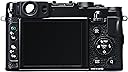
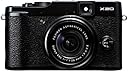
📸 Capture brilliance in every frame — the compact powerhouse for the discerning creator!
The Fujifilm X20 is a compact digital camera featuring a large 2/3-inch 12MP X-Trans CMOS II sensor, a bright Fujinon F2.0-2.8 4x optical zoom lens, and an advanced hybrid autofocus system. It offers an optical viewfinder with real-time shooting data and shoots Full HD 1080p video at 60fps. Designed for advanced users seeking DSLR-level control in a portable form, it combines classic build quality with modern imaging technology.
| ASIN | B00ATM1MHO |
| Age Range Description | Adult |
| Aperture modes | F2.0 |
| Are Batteries Included | Yes |
| Aspect Ratio | 4:3 |
| Auto Focus Technology | Center, Continuous, Live View, Multi-area, Phase Detection, Single, Tracking |
| Autofocus | Yes |
| Autofocus Points | 49 |
| Best Sellers Rank | #238,710 in Electronics ( See Top 100 in Electronics ) #2,205 in Digital Point & Shoot Cameras |
| Bit Depth | 12 Bit |
| Brand | Fujifilm |
| Built-In Media | Instruction Manual |
| Camera Flash | F2.0 |
| Camera Lens | 52 Mm |
| Color | Silver/Black |
| Compatible Devices | Fujifilm X |
| Compatible Mountings | Fujifilm X |
| Connectivity Technology | HDMI, USB |
| Continuous Shooting | 10 FPS |
| Customer Reviews | 4.3 out of 5 stars 178 Reviews |
| Digital Scene Transition | zoom |
| Digital Zoom | 2 |
| Digital-Still | Yes |
| Display Fixture Type | Fixed |
| Display Maximum Resolution | 676 x pixels |
| Display Resolution Maximum | 460000 |
| Display Type | LCD |
| Dots Per Screen | 460000 |
| Effective Still Resolution | 12 |
| Expanded ISO Maximum | 3200 |
| Expanded ISO Minimum | 100 |
| Exposure Control | Aperture priority, Automatic, Manual, Program, Shutter priority |
| File Format | JPEG Exif 2.3, RAW (.RAF) |
| Flash Memory Bus Interface Type | UHS-I |
| Flash Memory Speed Class | 10 or higher |
| Flash Memory Type | SD |
| Flash Modes | Automatic, Fill Flash, Red Eye Reduction, Suppressed Flash |
| Focal Length Description | 28 millimeters |
| Focus Features | Hybrid |
| Focus Mode | Automatic AF (AF-A) |
| Focus Type | Manual Focus |
| Form Factor | Compact |
| Generation | 2 |
| Global Trade Identification Number | 00074101021622 |
| HDMI Type | Mini connector |
| Hardware Interface | Secure Digital Card |
| Has Color Screen | Yes |
| Image Capture Type | Stills & Video |
| Image Stabilization | Optical |
| Image stabilization | Optical |
| Item Weight | 1.68 Pounds |
| JPEG Quality Level | Fine |
| Lens Type | Zoom |
| Manufacturer | Fujifilm |
| Manufacturer Part Number | X20 |
| Maximum Aperture | 11 f |
| Maximum Focal Length | 112 Millimeters |
| Maximum Image Size | 1080 Pixels |
| Maximum Shutter Speed | 1/4000 Seconds |
| Metering Methods | Multi, Average, Spot |
| Minimum Focal Length | 28 Millimeters |
| Minimum Shutter Speed | 1/4000 seconds |
| Model Name | Fujifilm X20 |
| Model Number | X20 |
| Model Series | X |
| Movie Mode | Yes |
| Night vision | No |
| Optical Zoom | 4 x |
| Photo Filter Size | 52 Millimeters |
| Photo Sensor Resolution | 12 MP |
| Photo Sensor Size | 2/3-inch |
| Photo Sensor Technology | CMOS |
| Real Angle Of View | 10.5 Degrees |
| Recording Capacity | 60 Minutes |
| Remote Included | No |
| Screen Size | 2.8 Inches |
| Self Timer | 10 Seconds |
| Sensor Type | CMOS |
| Series Number | 10 |
| Shooting Modes | Aperture Priority, Automatic, Manual, Program, Shutter Priority |
| Skill Level | Amateur |
| Special Feature | Lightweight |
| Specific Uses For Product | Photography |
| Supported File Format | JPEG Exif 2.3, RAW (.RAF) |
| Supported Image Format | JPEG, RAW |
| Total Still Resolution | 12 MP |
| Total USB 2.0 Ports | 1 |
| Total USB 3.0 Ports | 2 |
| Total USB Ports | 1 |
| Total Video Out Ports | 1 |
| UPC | 074101021622 |
| Unit Count | 1.0 Count |
| Video Capture Format | AVC |
| Video Output | HDMI |
| Video Resolution | FHD 1080p |
| Viewfinder | Optical |
| White Balance Settings | Auto |
| Wireless Technology | Yes |
| Zoom | Optical Zoom |
C**T
Best value for a compact digital!
This little guy is great! This is perfect for travel or for any casual shooting. The retro styling and weight of the camera adds a lot of value to it. The manual controls are nice and gives the camera a lot of flexibility. The lens on it is great and provides a wide range (28-112mm equivlent). With a apearture of 2.0-2.8, this is wonderful in low light situations and to get shots with decent bokeh. I love that there is a viewfinder with a settings overlay. This gives the camera less of a point and shoot feel. The built in flash is ok for close up or small room shots but I also love that there is a shoemount on here. I'm able to use my Nikon SB series flashes as well as Pocket Wizards on this camera! There are many in camera features that give this camera more value. The macro/super macro feature is great and the detail that you get in these shots are impressive. The advance modes, (Toy camera, minature effect, panorama, dual exposure) are fun. As far as overall performance, for what it is, it will not perform as well as a mid range or high end. I shoot with a Nikon D800 for work so its hard to expect the same performance/results with the X20. An example is the focal points, you can select a focal point but would have to use the actual screen and not the viewfinder. So it's not as intuitive if you're accustomed to using a mid range dslr or higher. Though I think this might be able to hang with a entry level dslr such as the nikon d3100. The picture quallity is very impressive. Not too much noise for high iso shots and is overall acceptable for most applications. Over all I think this is a great camera for this size and features. Definitely recommend this!
D**N
This stickler is pleased
A nicely built little camera with excellent lens. The copy I received from Amazon was brand new, unopened and untouched since leaving the factory. I won't repeat all the camera features and particulars--but those that surprised me: 1) the various frame formats offered beyond 3:4 (9:16, 1:1, etc.) only seem to work with jpg's, not Raw shots--too bad 2) RAW photographic results, despite the modest-sized 2/3 sensor, are simply stellar--with the right RAW developer software I downloaded software for developing RAW files from three independent Raw developers: 1) Iridient Raw Developer--the current version which I updated from an earlier one for a discount specifically for this camera 2) Capture One (trial basis) 3) Photoninja (trial basis) Fuji's modified sensor requires more care developing RAW files--but any of the above software works well. Photoninja seems to work the very best of the three, but I'm getting beautiful results with Iridient, the TIFF's then fiddled with in Photoshop RAW Camera tools. The resulting images come out remarkably sharp, though you will see noise with pixel peeking. The low light landscape photos were really nice, so I don't care about the inherent noise characteristics of a smaller sensor wedded to an excellent lens when together they do such good work. A pity one can't post examples next to comments. The smearing of some image details mentioned in some reviews is particularly well handled if not entirely erased by Photoninja and much diminished with the other RAW developers. Adding some middle darks more or less addresses most of the smear effects that are quite noticeable in early online reviews of the camera. The lens shows a little light falloff around F3.2., at least under the 35mm setting. At the widest 28mm lens angle, the far edge image resolution on the horizon falls off a little as well--again with pixel peeking. And that is all I could find to fault--and I do look for faults. I rounded out the purchase with an off-brand PU "leather" case that allows the top to be removed if the camera is on a tripod and an off-brand lens hood and cap. And a second battery. A Class 10 SDHC card is recommended for video. The photos record fine with Class 4 SDHC cards. Lastly, Amazon really out to take better care about cushioning product boxes in their packages.
M**R
The best current high quality Point and Shoot in the market
Fujifilm has done it again! X10 was a remarkable powerful camera with quality and functionality that are many times absent from intro to intermediate level DSLR. In my personal testing X10 was better performer than Sony's RX100, Canon's S100 and G15. But that was just X10. So, when Fujifilm came out with an upgrade of X10 as X20, honestly, I got a little skeptical because sometimes an upgrade will ruin the original. So, I waited a little until I saw some sample images at some popular review sites. So finally, when X20 became available for shipment, I had to order it to try it out. Boy, was I surprised at the image quality and performance! X20 is not an upgrade to an already great camera X10 but an amazing high quality camera of its own class and distinction. Pictures are crystal clear with so much details. Focusing much faster than any other point and shoot I ever used. Works fantastically well in low light. Most cameras have lot of trouble taking decent shots in low light or indoors. But X20 is a champion of low light and the indoors. The macro and the super macro works flawlessly and the super macro magnifies tiny stuff quite a bit with awesome clarity. Bokeh in the zoomed wide aperture shots are also super sooth and looks great. Needless to say this is an awesome camera and I am deeply in love with it. If you are in doubt don't be. Get one and see it for yourself. I am sure you will fall in love as soon as you get it.
J**M
Good looking but????
I waited for the Fuji X20 for a couple of weeks. When it finally came I was excited to open it up and start using this beautiful electronic device. I was very happy with the way it looked and handled although the lens did pop out a lot more than I would have liked. The controls are placed nicely, it starts up lightning fast and looks nice, I guess I said that already. Auto focus is fast fast in the right light. Challenge it a bit with less than favorable lighting conditions and it will struggle some. Image quality is good but definitely not good enough for me to fork out the kind of money Fuji is asking. The X20 is a good camera but seemed to me like a big boy looking camera with nice controls that doesn't deliver in IQ. The viewfinder was ok. It really sucked if you added a filter adapter and hood as it blocked the bottom 25% of your view that made the VF useless. It would be a great camera at the $300.00 price point. I am convinced that I could find a much cheaper point and shoot the delivers better than the X20 unfortunately. Sorry Fuji I really wanted to like this camera but it's not in the $600.00 club. I purchased the Sony rx100 and love it. This is after trying the Fuji x-e1, the Lumix G5 and the X20. All different animals I know but the Sony beats them because how balanced it is. Great IQ, features, controls (menu but still good), size, build quality, art filters and video.
J**H
Great if you like old school rangefinders, optical viewfinders, or mostly use the LCD
I watched so many review videos and read a bunch of forum posts about this camera before buying a used one from a retailer in Japan who tried to rip me off for return shipping (they wanted to charge me retroactively for shipping the camera TO ME when I submitted a return request in addition to paying return shipping out-of-pocket. How insane is that?) but this review isn't for Amazon's sketchy merchants, it's for the Fujifilm X20. The camera is small. I like that. It's small, retro and feels really solid. It's metal and... whatever that stuff is. Rubber? Faux leather? Whatever it is, it's of excellent quality. Fujifilm cameras really do put out some great looking photos, so that's a given. My problem is mostly with manual focusing. Using the viewfinder with auto focus is nice because you'll get your aperture, shutter speed, ISO, and a square or rectangle indicating what is being focused. Apparently there is an indicator for when something is out of frame (parallax) but I did not encounter that while shooting. The deal breaker for me was in the way manual focusing works. I didn't know this before I bought the camera, but in order to focus manually, you have to turn this little dial that's around the circular control button (the one that's usually a d-pad for menu/flash/macro etc). When you do that, of course because it's an optical viewfinder, not a hybrid viewfinder (and the camera is not a DSLR) you need to use the LCD to focus manually. I exclusively shoot through the viewfinder. I don't know why I didn't realize that the OVF would be useless by design for manual focusing. I guess because I owned (and was spoiled by) the X100T. I wrongly assumed that the X20 would have some sort of focus outline or something similar to what's in the X100T's hybrid viewfinder. Of course it doesn't! The X20 is not advertised with such a viewfinder. If you're like me and enjoy shooting entirely through the viewfinder, either get one with a hybrid viewfinder (X-Pro1/2, X100/S/T) or get used to electronic viewfinders. EVF's are really useful, but some people (myself included) are put off by the presence of a screen against their eyeball. So, my missing star is not for my mistake. It's for the battery life (which pales in comparison to the X30), lack of every film simulation modes found in other cameras (really, there's no reason Fujifilm couldn't throw in Classic Chrome besides selling newer models) and for the somewhat inconvenient method of turning the camera on and off. The X30 operates in the same way. You have to twist the lens. I'd prefer an on/off switch so I can save battery power without having to set my focal length every time.
L**P
The Tiny X-Pro?
Last Autumn, we took a family trip to the wonderful island of Oahu in Hawaii. I hadn't been to Hawaii in many years, and was very excited to shoot photos during our fun family adventure. It was just as beautiful as I remembered, and I had the excellent Fujifilm X-Pro 1 along to capture the colors and mood of the Islands. While on the trip, I expected to see all sorts of wonderful cameras, and I pre-supposed that I'd see a few X-Pro's along the way. However, while I did see many of the normal DSLR's, I noted throngs of traveling Japanese photographers carrying along a little Fuji I knew as the X10. While I did see one other X-Pro on that trip, it certainly stuck in my mind that the X10 had to be one of the most popular cameras on the island. This surprised me, as I always considered the X10 to be the "inferior little brother" of the "real X-cameras." I know of the culture of miniaturization in Japan, but beyond size, I wondered: am I missing something? Much later, I noted the announcement of the Fuji X20, which essentially appeared to be an X10 with a better viewfinder (including shooting information), better autofocus, and an application of the X-Trans sensor technology in the 2/3" sensor size. This really intrigued me, and I decided to answer that question ("am I missing something?") by ordering an X20 from Amazon. The first X20 that arrived was clearly used, even though I purchased a new model. I was disappointed, and even more so when I found out I couldn't receive a replacement from amazon, I had to ship it back, get a refund, and order a new camera. I figured if I had to go through all that trouble, I might as well take a few shots to see what I thought; if I ended up unimpressed, I could always just not order another. I only shot a few frames while out for dinner one evening, but I was quite pleased with what I saw, finding it particularly good at black and white, with a fairly characterful rendering by the fast zoom lens. The autofocus was snappy and positive, and I REALLY liked the twist-to-zoom lens with "35mm equivalent" marked focal lengths. About a week later, I received my 2nd X20. I had the great fortune to receive it on a Friday afternoon, just before a beautiful weekend where I had a good amount of leisure time to put it through it's paces. Perhaps surprisingly, I have already answered that question all the other Japanese tourists knew: YES, I was missing something by discounting the X10/X20… This really is a great little camera. Certainly, compact cameras have come a LONG way in the past few years. One could argue that they had to--otherwise the cellphone-cam-shooting public wouldn't buy them in any numbers. With each year, compact enthusiast digital cameras get better and better--not only in specs, but in haptics, operation, and image quality. I feel like Fuji, in particular, has really been on a roll lately; although their cameras aren't always the best at a pixel-peeping-level, they sure feel built by photographers, for photographers. The X20 felt just like a mini X-Pro 1; the controls are in the same place, you have the same options for configuring and shooting, and it just disappears in your hands and lets you shoot, chasing your muse. I feel like the X20 is skirting the ability to satisfy completely; in good light, the image quality is stunning, with excellent "pop" and 3-dimensionality from it's images. I didn't expect this from such a tiny sensor, and it has just enough subject separation that you do get a nice "feel" to the images. You're not going to vaporize backgrounds, and the fujinon zoom isn't the smoothest of bokeh renderers in some situations. But there's some of that X-Trans magic in there (smooth tonality, rich color palette, nice quick transition between in-focus and oof). Although not as forgiving as the bigger APS-C X-Trans, and very quickly as you move up the ISO ladder you get a lot of noise and lose some of the tonal magic, there's just enough performance in there to reward exploring the envelope a bit. When you do explore the envelope, you find a camera that responds intuitively, quickly, and positively. The autofocus positively rocks--if the X-Pro were this good people would swoon, selling their SLR's in droves. Maybe not, but I speak in hyperbole to emphasize that this little camera didn't stand in my way like so many little cameras of the past--I felt free to use it just like I would my DSLR. There were occasional missteps when shooting with the OVF (the X20 does help with parallax correction, but its response takes some getting used to), and sometimes the tiny sensor just couldn't quite give me all the tonal details I wanted, but to be perfectly honest--there were just as many times that I let the camera down, so I can't lay all the blame on the little X20. I'm also finding the film simulations to behave quite well; I had an X-S1 last year and while I really enjoyed the fun of having such a flexible (and well built) all-in-one camera, I found the image quality wasn't any better than my Pentax Q and the film simulations behaved nothing like those on the X-Pro. It's no secret I loved the film sims on the X-Pro; for me, it's very freeing to have so many "film types" built into the camera. I'm old enough to have many experiences of walking around with a roll of film in my camera, and thinking, "oooh, I wish I had X film loaded instead of Y film." Certain subjects simply lent themselves better to one emulsion over another, and learning the ins and outs of those emulsions stimulated creativity and enhanced artistic intent (IMO). I remember when I got my first digital camera, and I thought, "this is sweet--I can shoot every film type I want, changing every frame if I wish!" Only that proved completely untrue… Digital cameras simply pumped colors one way or another in a very unnatural fashion. Until the X-Pro. Excepting the Velvia film simulation, which I still feel is the furthest from "real" feeling to me, I dearly love the other film sims and the highlight/shadow tone controls Fuji gives to tweak their response. Although the X20 behaves a bit different from the larger X-Pro's X-Trans, especially in the tone curve area, I am finding the sims and tone curves every bit as useful and fun as those in the X-Pro. My favorites on the X-Pro are quickly my favorites on the X20 (monochrome Y and G, Provia, Pro Neg Std, and Astia). I'm very pleased that this little 2/3" sensor has enough color depth and richness to pull this off. Speaking of the X-Pro 1, the X20 handily beats that camera in speed. Focusing, image review, in-camera RAW development, burst speed; all are noticeably faster in the X20 than the flagship X-Pro. One more quick mention of a feature not often discussed: Face detection works brilliantly, and the viewfinder overlay even shows the detected face with added parallax correction, so I'm finding myself using the OVF quite a bit with "people photos." This is fabulous, as any OVF allows one to focus on expression in real-time, grabbing just the moment you want. This is a fabulous camera to shoot kids, with fast focus acquisition and parallax corrected OVF, you can really grab those beautiful childhood moments. Limitations? Yes, other than the smaller-than-APSC performance envelope mentioned above, there are some things that limit one a bit. You do get some DoF control, but not as much as you do with a larger sensor. Bokeh is usually quite good, but some light sources are rendered as a hard-edged ball with a distinct center bullseye; not so pretty. The JPG engine is heavily biased towards noise reduction, and even with it at -2 (which I leave it at, all the time!), it's too heavy. Color depth and richness is good-to-excellent at base ISO, but never reaches the drown-yourself-in-richness of the X-Pro, and suffers quite a bit as ISO rises. In some light you just won't get the color flexibility of the larger camera. High ISO capability is good, and coupled with excellent image stabilization you can shoot in almost any light, but I won't use >ISO 800, to be honest. Things just get too smudgy up there, and color accuracy and richness becomes iffy in some light around ISO 800 and goes downhill fast after that (although nothing like the Sigma Merrill cameras, which take the cake for worst high ISO performance of any camera!). Battery life isn't great; this is the same battery as used in the Pentax Q, and it gives about as many shots as it's mouse-sized impression would lend you to believe (around 200). You may need more batteries. I'm thrilled with the parallax correcting ability of the focus point in the viewfinder overlay, but it takes some study to master, and since I haven't mastered it yet I still miss OVF shots on occasion. Quick comparison with the Sony RX100: I owned a Sony RX100 for some months, and although I was (and remain) astonished at the pure image quality that the RX100 can deliver in good light, I ended up cooling to the camera over time. Firstly, it feels like a computer, not a camera. The X20 is obviously built by folks that know photography as an art form, and not a spec sheet. The RX100 feels like a tech toy. Is this a problem? It can be; if the tool doesn't "disappear" in your hand, your art will suffer. Some won't care, and that's ok, although the X20 produces stunning files at low ISO, the RX100 will be a bit "better" from a sharpness and detail perspective, at least (color is another matter). Secondly, the RX100 requires one to use an external RAW editor to get the best out of the camera. As a family/travel camera, I don't want to sit behind a computer and edit RAWs for hours on end; the X20 gives you excellent RAW processing right inside the box. Thirdly, the RX100 wasn't durable for me. Mine broke just carrying it in my pocket. Sony fixed it fast, but I lost faith in the camera as a pocket camera. Time will tell with the X20, but it certainly "feels" better built than the RX100. All in all, I am really enjoying the flexibility that it gives--it's like a tiny X-Pro 1 with 28, 35, 50, 85, and 105mm lenses all in one… Dial up your preferred focal length, look through the bright real-image OVF, and shoot like a tiny rangefinder. What fun! There are limitations, briefly touched on above, but I encourage you to try the X20 before dismissing it as the "inferior little brother" of the X camera line..! I now see why all those tourists carried the X20's predecessor--although it won't have quite the performance envelope of the bigger-sensor cameras, you gain flexibility and a really carefree attitude towards shooting that seems to fit a vacation. No one is paying me to shoot my own travel, in the end. And I did find myself wishing I had the XF zoom for my X-Pro on occasion. So why not an X20?
J**S
My New Fuji X20
What a marvelous little camera! That OVF is perfect for those bright days when everyone limited to their LCD is seeing only a black screen...and I am seeing a perfect real life view of what I am shooting! The images are superb, and if you can find a more solid all metal camera finished out with solid controls and wrapped in a gorgeous little body, you had better buy it, because it will be the only one on earth other than the X20! Is this camera dream, or a dream come true? It will come true for you the first time you feel that fine craftsmanship in your hands and then take a shot, using the fastest auto focus of any small camera made! Half press, and it's focused sharp and accurate before you even get the shutter button all the way down....simply amazing! Options abound, the great Q menu give you fast and easy access to most all you ever need to chane settings. ...and did Imentionthat fantastic Fuji color...plus your choice of retro Fuji film styles. You're going to love it, I guarantee!
L**S
A photographer's camera
Update October 2013 * Short version * The X20 is helping me to make better photos and rather forget about the camera. I suspect I will stick to the X20 for quite a while. * Longer version * After six month using the X20, I just love it! It feels like a real camera. To start with, no need to switch it on, as it comes instantly alive on deploying the otherwise retracted lens. Mine goes around protected, discreet and ready dressed on a permanent Fotasy 40 mm UV filter and a Megagear old-way-looking black leather case. For fast action, looking through the viewfinder and using AFL, the delay is just that between human brain and human finger. If so needed, it can be made to work silent. I mean, really silent as only a leaf shutter can. The tiny built-in flash is super intelligent at filling-in portraits Picture quality beyond reproach. On average shooting conditions, for average purposes, indistinguishable from an ASP-C DSLR: fine detail, natural colors, no burnt highlights nor overcontrast. JPGs out of the camera look nice - but I got spoiled after discovering PhotoNinja, a converter that pulls out magic out of the X-Trans RAW files. X20 and PhotoNinja seem to bo born for each other: hi-tec hidden below the hood, user friendly, great output. Cameras do not take pictures. People do. Thanks, Fuji!
R**A
Excellent professional level compact camera
One of the best compact cameras for advanced photographers who want full manual functions in a compact size. I have a Canon 5D Mark 2 as well, but cant always carry that around. This is a great substitute when you are travelling and for candid or street photography. Excellent image quality and tonnes of features. Am very happy with the purchase. Also, I got a great deal at Amazon and am not surprised, as I have been an Amazon user and fan for a long time. Recommended product - buy it now as the X30 is now out and it is bigger in size.
K**N
Excellent Camera
Small, light, unobtrusive, and takes excellent photos. Plenty of external adjustments for fine-tuning photos in the field. Just what I wanted. A great buy.
S**N
X20 :)
The beautiful camera in the world……… I Like this Camera Stills And Video… soooper out Auto focz is 100% clear I love Thiz :)
A**.
Great simple hobby camera except it stopped working soon after purchase
*I'm not a professional photographer *edit* New review 2.5 stars: I actually have been having a lot of problems with the camera about 3 months after I purchased it (and according to amazons return policy I can't return it now. I'm hoping to contact fujifilm next). Every time I turn it on, It says either "Lens error" or "Focus error" and it will not allow me to use it, I believe it's a manufacturer problem because I have hardly used it and I have treated it well. I also believe it's a manufacturing problem because the very first time I had ever turned it on (straight from the box) it presented the "focus error", that should've been a red light for me but it did seem to fix itself so I did not contact amazon. But now it's only getting worse to the point were I just can't use it. This is disappointing for me because the camera is actually very nice. Original review was 5 stars: This is a great camera that takes high quality/clear images. It's small, and simple to use. Good for hobby photographers. My friend bought one, and after seeing her untouched photos, I had to buy one as well. Battery doesn't last as long as previous cameras I have owned, I would suggest buying a back-up battery with it if you think you will be taking this camera away from a charging outlet for long periods of time. I'm taking it to music festivals so a second battery is needed. Short answer: worth it
J**M
Great camera for the skilled yet, casual photographer
If you're looking for a camera that looks nice, has some features for you to play with, but it also small and easy to use, this is it. As a person who cut his teeth using a DSLR in art school, I like have features I can play around with to get a perfect exposure, but I also like having something ready so I can take a few snaps without getting frustrated. Additionally, the camera is small enough that it doesn't take up the same space as a DSLR. While I was hoping the camera was a little bit smaller, and the form factor easier to hold, I like this camera.
Trustpilot
2 days ago
5 days ago